Each donation helps to ensure the Museum's activities, allowing it to function and provide information for people from all over the world.
The Museum is grateful to each donor and invites everyone to contribute.
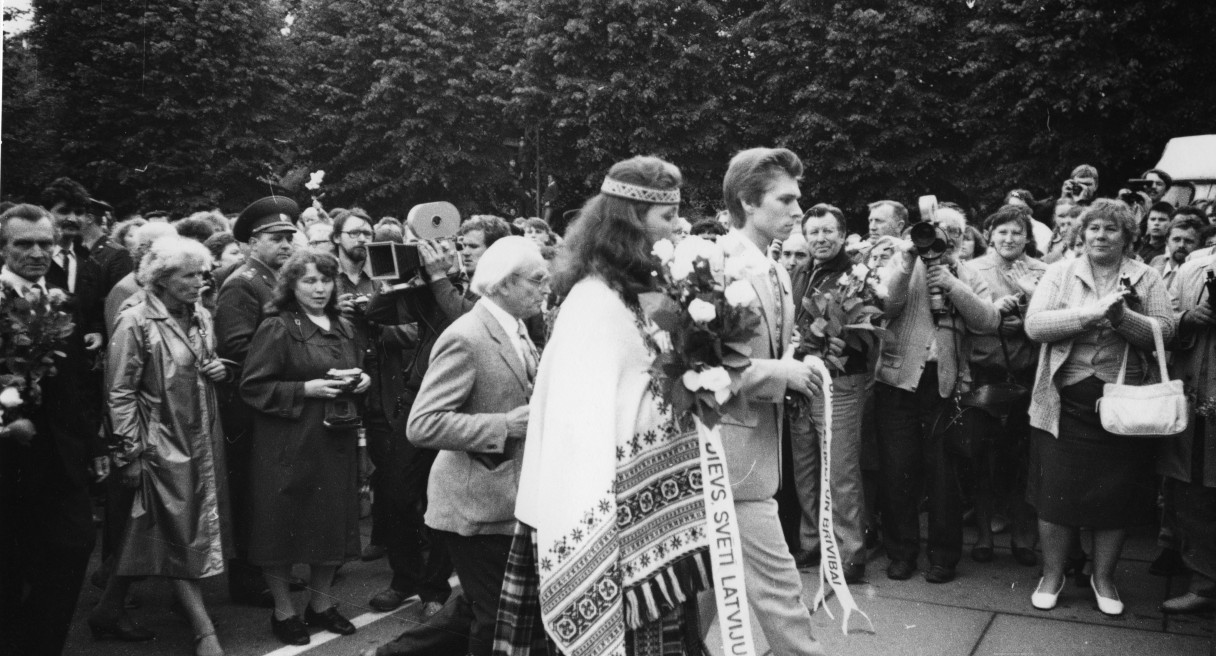
Forty years ago, on July 10 1986, the human rights advocacy group “Helsinki-86” – one of the pillars of the Third Awakening – was founded in Liepāja.
The informal group was founded by labourers Linards Grantiņš, Raimonds Bitenieks, and Mārtiņš Bariss, citing Articles 49 and 50 of the Constitution of the Latvian SSR, which guaranteed the right to form public organizations and freedom of conscience. Their intention was to monitor “how our people’s economic, cultural, and individual rights are being respected.” The group’s initial goal was to assess the implementation of the provisions of the 1975 Helsinki Conference’s Final Act relating to the freedom of nations and individuals; however, over time, its activities expanded.
The group’s members appealed to Mikhail Gorbachev, the General Secretary of the Central Committee of the Communist Party of the Soviet Union, requesting the implementation of Article 69 of the Constitution of the Latvian SSR. This article stipulated that the republics had the right to secede from the USSR. The group was also involved in the production of the independent magazine “Auseklis”, published in Sweden.
On June 14 1987, “Helsinki-86” organized a flower-laying ceremony at the Freedom Monument in Riga to memorate the victims deported on June 14, 1941. Although the authorities tried to prevent this event – for example, Linards Grantiņš, Raimonds Bitenieks, and Mārtiņš Bariss received draft notices for the Soviet Army – it took place nonetheless. The militia and the KGB did not intervene; after the flowers were laid, people began to gather for a spontaneous rally that lasted two days and drew about 5,000 people. The commemoration of the deportations raised the issue of the crimes committed by the communist regime and, consequently, the legitimacy of Soviet rule in Latvia.
On August 23, 1987, a demonstration organized by “Helsinki-86” to condemn the Molotov-Ribbentrop Pact ended with violent intervention by the militia and the detention and arrest of participants. Nevertheless, the “Helsinki-86” activists continued to organize similar actions, advocating for human rights and the right to self-determination.
The activities of “Helsinki-86” became a significant turning point on Latvia’s path to the restoration of independence. Its courage in publicly speaking about the consequences of the occupation and human rights violations inspired thousands of people and helped to lay the foundation for the Third Awakening, which culminated in the restoration of Latvia’s independence.
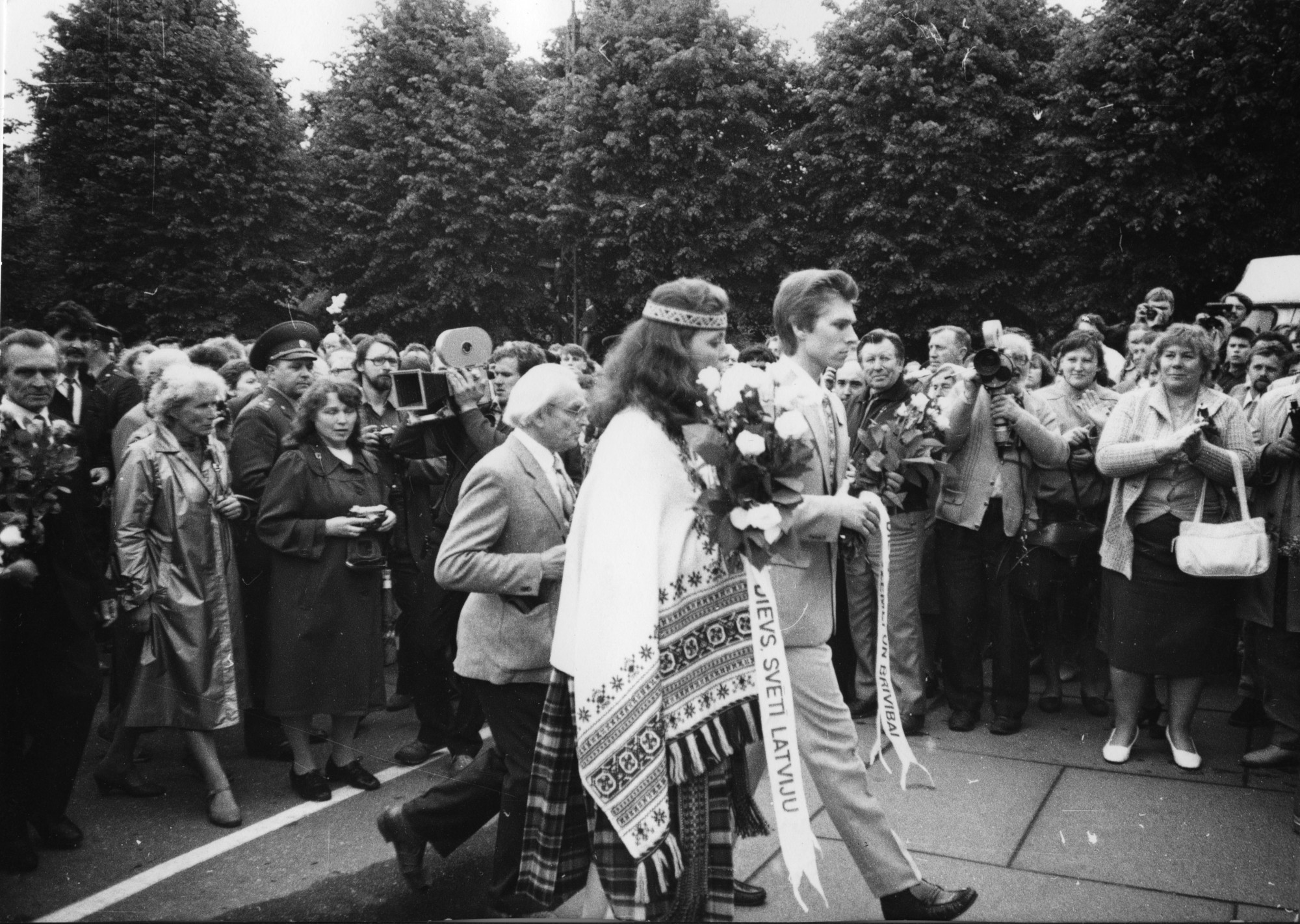
The "Helsinki-86" march—Rolands Silaraups and Ēva Biteniece lay flowers at the Freedom Monument in Riga on June 14 1987 (photo from the collection of the Museum of the Occupation of Latvia).
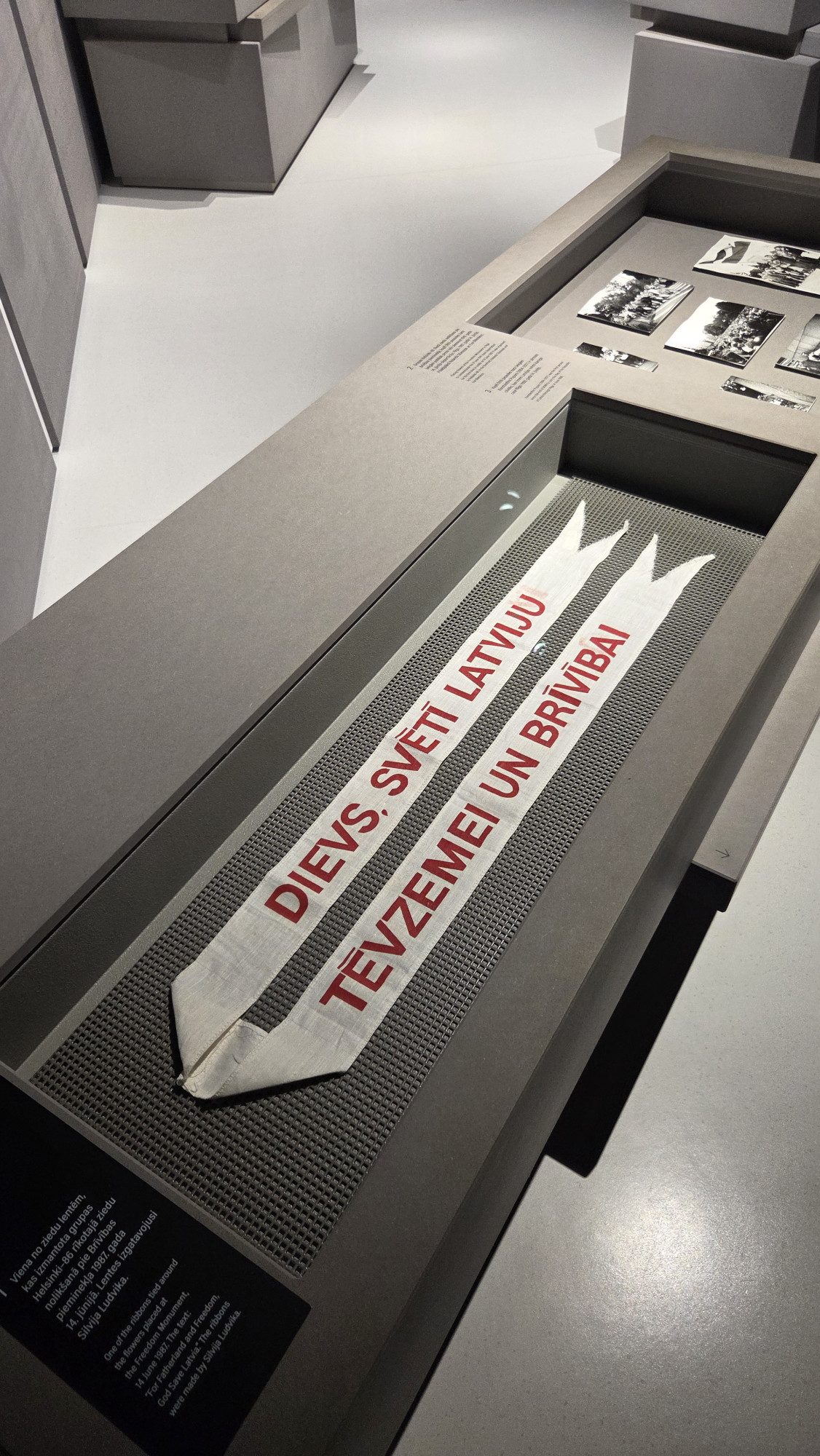
One of the ribbons tied around the flowers placed at the Freedom Monument in Riga on June 14 1987 during the ceremony organized by the group “Helsinki-86”. The text: "For Fatherland and Freedom. God Save Latvia." The ribbons were made by Silvija Ludvika (photo from the Museum’s Main exposition).
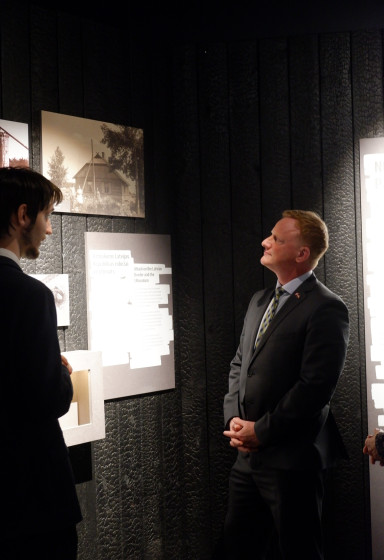
The Museum was visited by the Ambassador of Canada
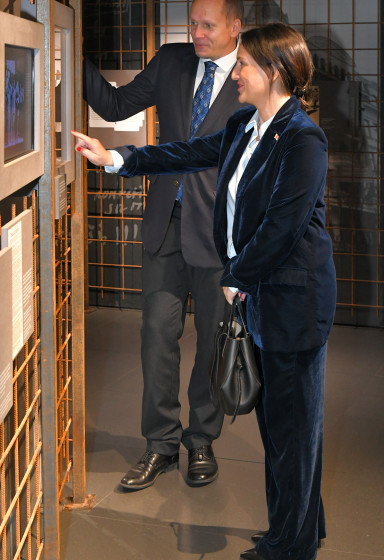
The Museum was visited by the Ambassador of Georgia

The Secretary General of the Council of Europe visited the Museum
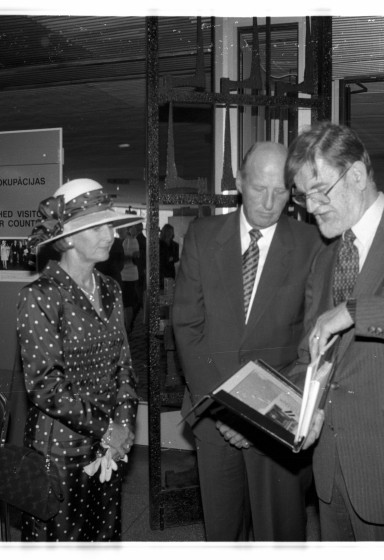
In Memory of King Harald V of Norway
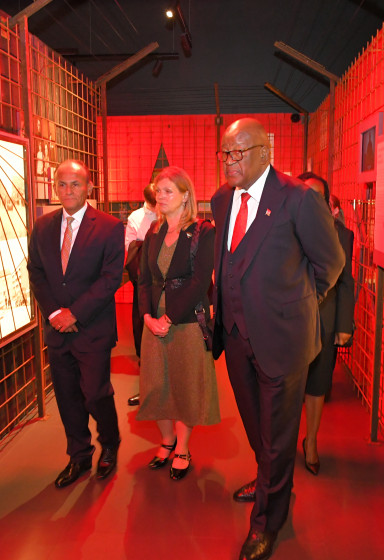
The Museum was visited by Ambassadors of Namibia and Peru